
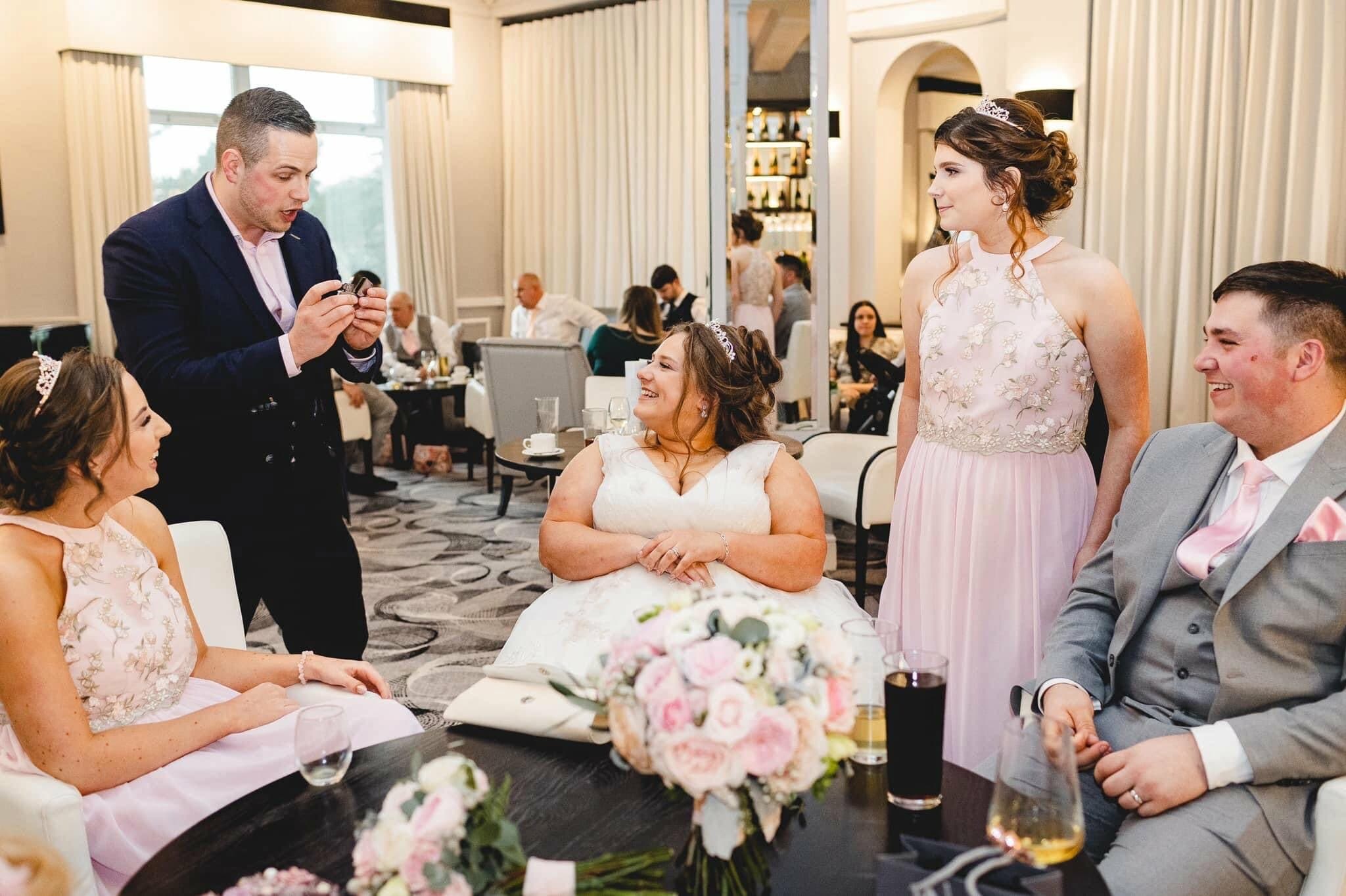
What matters most
- Choose a performer with real adult wedding experience and a style you would welcome at every table.
- Ask for a recommendation based on your actual timeline rather than buying a generic package.
- Confirm fee, travel, performance period, payment dates, cancellation terms and venue documentation in writing.
- Strong magic matters, but warmth, judgement, communication and supplier coordination matter just as much.
Check they regularly perform at weddings
A technically skilled magician is not automatically a skilled wedding supplier. Weddings involve mixed ages, moving schedules, formal photographs, catering service and guests who did not arrive expecting a magic show.
Ask how the performer approaches a drinks reception, a delayed meal and a room split across several spaces. Their answers should show an understanding of guest flow, not only tricks.

Watch the style, not only the impossible moment
A short clip can prove that guests react, but pay attention to how the magician creates that reaction. Are people relaxed? Is the humour kind? Does the performer dress and speak in a way that suits your celebration?
Look for sustained footage, a showreel and examples from adult events. You are choosing a personality who will introduce themselves to your closest friends and family.
Read reviews for reliability as well as entertainment
The most useful reviews mention communication, punctuality, adaptability and how the performer treated guests. Five stars alone tell you less than a detailed account of the booking experience.
Check more than one platform where possible and look for recent weddings. A polished supplier should also be willing to explain their experience and share relevant examples without handing out former clients' private details.
Ask where they would perform—and why
The drinks reception, between courses, room turnaround and evening arrival can all work. The best choice is the one that addresses your longest wait, most awkward transition or greatest need for guest mixing.
Send the rough timeline and listen for a reasoned recommendation. Be cautious of anyone who insists every wedding needs the same package regardless of venue or guest plan.
Agree what ‘coverage’ actually means
Confirm the arrival window, performance start, expected duration and whether the booking covers one continuous period or separate parts of the day. Ask how guest numbers and venue layout affect what can be delivered well.
Do not rely on a promise that every guest will see magic unless the proposed time makes that realistic. A meaningful experience for each group is better than a rushed lap of the room.
Compare price on a like-for-like basis
A quote should state the total fee, what it includes, whether travel is covered and when payments are due. Compare time, date, location, experience and service—not just two numbers labelled ‘wedding magic’.
Ask what changes the price and whether longer or split coverage would add genuine value. A professional should be able to explain the recommendation without pressure.
Read the booking and cancellation terms
You should receive written terms covering payment, cancellation, postponement and the responsibilities of both sides. Check what happens if the schedule moves, the venue changes or severe disruption makes performance impossible.
Clear terms are not a sign that a supplier expects trouble. They prevent assumptions and protect both the couple and performer.
Confirm insurance and venue documentation
Venues may request public liability insurance and other supplier information. Ask early so documents can be provided without a last-minute chase. Any electrical equipment should meet the venue's testing requirements.
Close-up magic normally needs very little technical setup, but the performer should still respect access rules, fire routes, safeguarding expectations and the coordinator's instructions.
Discuss tone, boundaries and accessibility
Tell the magician if you want a very formal tone, if certain jokes or themes would be unwelcome, or if guests have access and communication needs. A good performer can be lively without embarrassing anybody.
Participation should remain optional. The strongest close-up magic lets a guest become part of the effect while preserving their dignity and comfort.
Make sure presentation fits the wedding
Ask what the magician normally wears and share the dress code. The goal is to look polished and recognisable as a supplier without appearing out of place in a black-tie room or relaxed outdoor celebration.
Presentation also includes language, volume and how the performer enters conversations. These small choices determine whether the entertainment feels integrated or intrusive.
Share the real venue layout
Tell the performer if guests will be divided between a bar, garden, terrace and dining room. Mention stairs, ferries, remote access, parking, curfews and any wet-weather change of space.
No stage is needed for roaming close-up magic, but there must be enough room to approach a group without blocking staff. A floor plan or coordinator introduction can solve this quickly.
Connect the magician with key suppliers
The venue coordinator, photographer and catering lead are the most relevant contacts. They can signal when a group is needed, when plates are about to arrive and when guests will be called into the next room.
One shared timeline and a named on-the-day contact are usually enough. You should not have to manage supplier choreography yourself during the wedding.
Judge the communication before you book
Replies should be clear, personal and relevant to the details you sent. Notice whether the magician answers questions directly, explains the next step and records the agreed plan in writing.
You do not need to micromanage individual tricks. Once style, boundaries, timing and logistics are agreed, trust the performer to read the room. That balance—clear planning followed by professional judgement—is what makes the experience feel effortless.
Questions couples and planners ask
What should I ask a wedding magician before booking?
Ask about wedding experience, style, recommended timing, coverage, guest numbers, total price, travel, insurance, booking terms and how they coordinate with the venue, photographer and caterer.
Do wedding magicians need a stage?
Roaming close-up and table magic do not need a stage. The performer needs safe access to guest groups and should avoid service routes, active dining and formal announcements.
Should we approve every trick beforehand?
Usually not. Discuss style, boundaries, guest needs and anything you want avoided. Then choose an experienced performer whose professional judgement you trust.
How do we know a wedding magician is legitimate?
Look for a real business identity, recent independent reviews, clear written terms, insurance, professional communication and examples of adult wedding work. A logo alone should never be the deciding factor.