
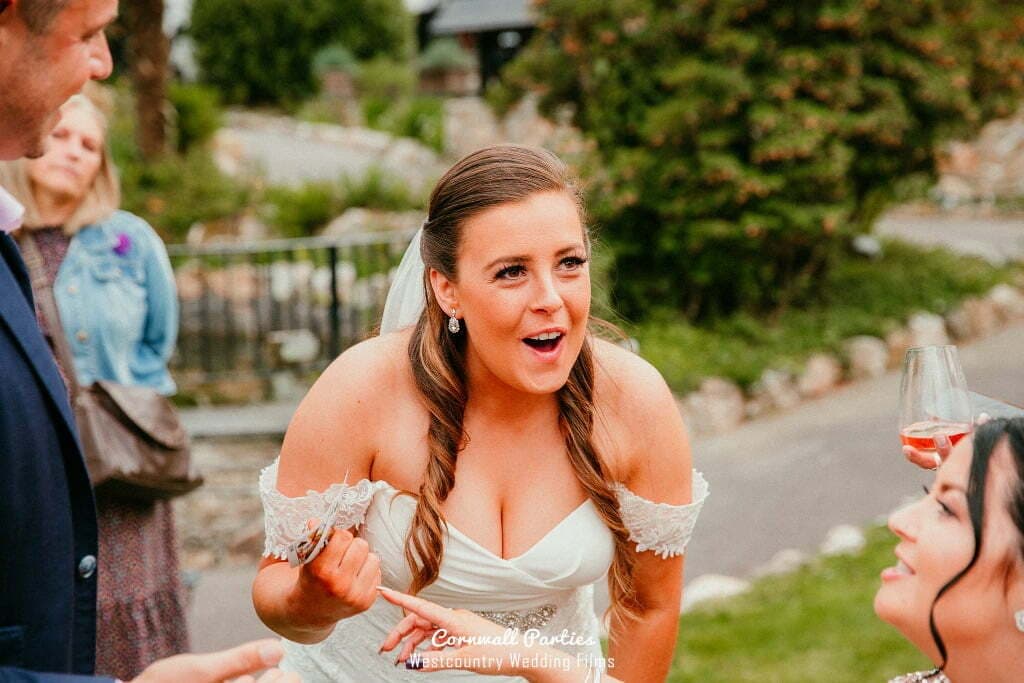
What matters most
- Close-up magic is most useful in natural gaps: photographs, long drinks receptions, meal service and room turnarounds.
- It gives guests who have never met a shared reaction without forcing anyone to participate.
- A mobile magician can adapt to changing timings and work without a stage or complicated setup.
- The right performer should fit the tone of an adult wedding and support other suppliers rather than compete with them.
What does close-up wedding magic involve?
Close-up magic happens only a few feet from the guests, usually with cards, coins, borrowed rings and other small objects. There is no distant stage and no need for the whole room to watch at once. The performer moves between groups or tables and creates a series of personal moments.
That intimacy is what makes it useful at a wedding. Guests are not just watching an act from their seats; they are part of a small shared experience. The strongest reactions often come from the fact that everything happened in their hands and under their eyes.
Lewis has worked in this format throughout his professional wedding career. The technique matters, but so does reading the room: knowing how to approach a group, when to leave them wanting more and when a conversation should not be interrupted.
It breaks the ice without awkward introductions
Most weddings bring several social circles together: two families, old school friends, work colleagues and plus-ones who may know nobody. The ceremony gives them a shared reason to be there, but not always an easy opening line afterward.
A magician creates that opening naturally. A few people gather, something impossible happens and the group reacts together. The conversation that follows is effortless because there is already something to discuss.
This does not require loud audience participation. Good close-up performance is warm and optional. Guests can join, watch from the edge or continue their own conversation.
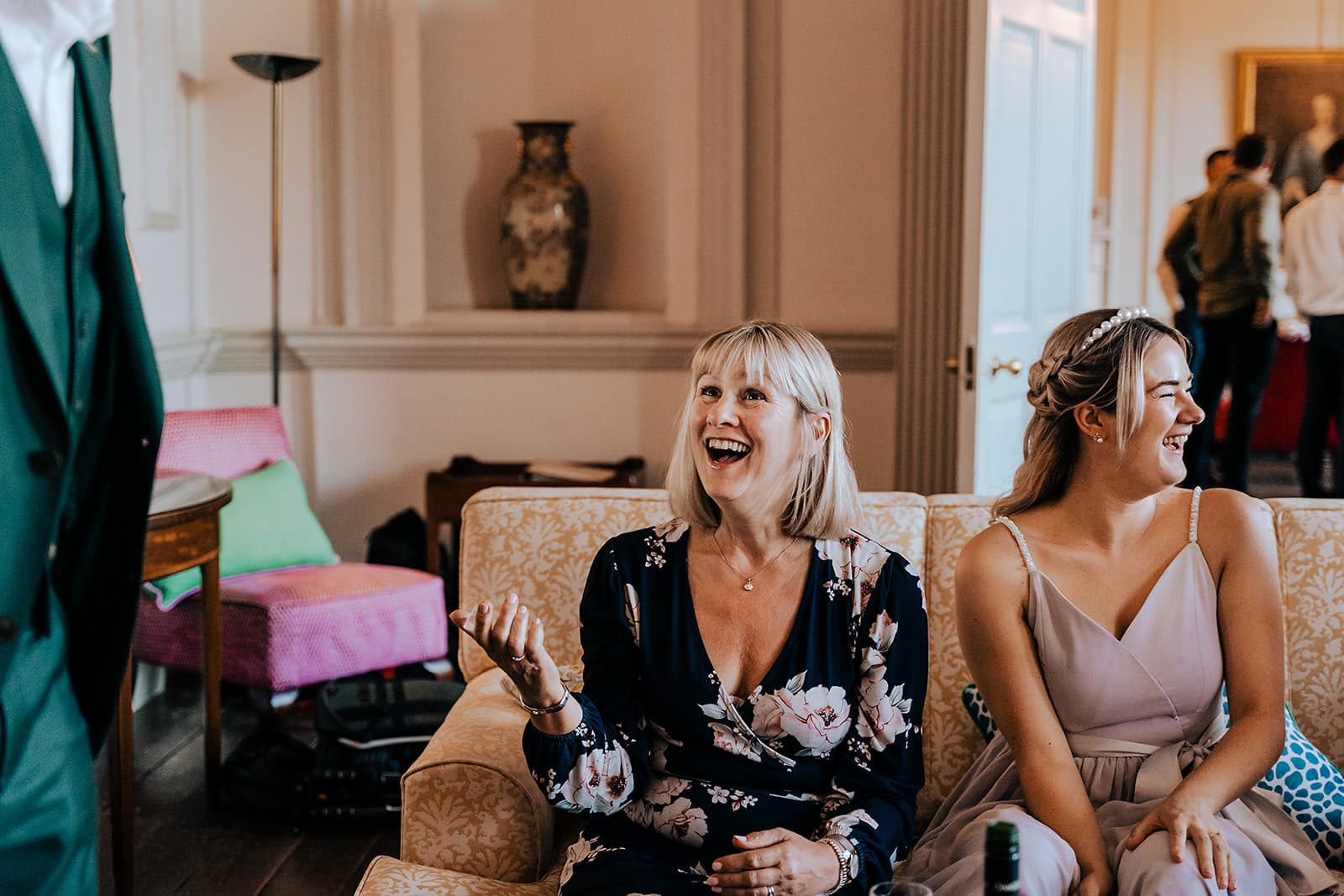
It turns necessary waiting into part of the celebration
Weddings contain pauses for good reasons. Photographs take time. Caterers need to serve a room carefully. Venue teams may need to clear tables and prepare the dance floor. The problem is not the pause; it is allowing guests to feel that nothing is happening.
Close-up magic can live inside those periods because it is mobile and does not need a fixed start for everyone. During photographs, Lewis works with the guests who are free. Between courses, he approaches tables only when service allows. During a room turnaround, he can move with the guests into the bar or lounge.
It creates the kind of reactions photographers love
Close-up magic produces layers of expression in the same frame: laughter, disbelief, concentration and the instant someone turns to a friend to check they saw it too. These are genuine reactions rather than poses arranged for the camera.
The photographer remains in control. A professional magician should never hold onto someone needed for a group picture or pull attention away from the couple. Instead, the two suppliers can work around each other—the photographer capturing available moments while the magician keeps other guests engaged.
Guests become part of the experience
A great deal of a wedding is necessarily observed: the ceremony, speeches, first dance and cake cutting. Close-up magic changes the mode for a moment. A guest may hold an object, make a choice or discover that something impossible has happened in their own hand.
Participation is strongest when it feels safe. Nobody should be mocked or trapped into performing. Lewis's style is built around easy rapport and shared fun, so the guest who helps becomes the hero of the moment rather than the target of a joke.
It can connect a genuinely mixed guest list
Weddings are one of the few celebrations where several generations spend the whole day together. The entertainment needs enough sophistication for adults without excluding younger guests or people who prefer a quieter experience.
Visual close-up magic crosses many of those boundaries. It does not depend on knowing a particular song, cultural reference or in-joke. The performer still needs to adjust tone and pacing for each group, which is why adult wedding experience matters.
It is flexible when a wedding runs late
A schedule moving by fifteen or twenty minutes is normal. Photographs take longer, traffic delays a family member or catering needs more time. Close-up magic can adapt because it is delivered in short group experiences rather than one immovable production.
That flexibility has limits, and the written booking should still include an agreed performance period. The useful point is that Lewis can respond intelligently to ordinary drift and coordinate with the person running the day.
It gives guests a story they retell
People may not remember every menu detail or table decoration, but they remember how the day felt. A small impossible moment experienced with friends becomes a compact story: what they held, what changed and how everyone reacted.
That is why close-up magic can feel more personal than entertainment watched from a distance. Different groups have their own moment, yet the visible laughter lifts the atmosphere around the room.
How to hire the right wedding magician
Watch a showreel, read recent reviews and ask where the performer recommends fitting into your specific day. Check that their presentation suits your wedding and that they regularly work with adult, mixed-age audiences.
Lewis has performed at weddings and events across Devon and Cornwall, served as president of the Plymouth Magic Circle in 2015 and is recognised on the current LB Magic site for repeated wedding-entertainment awards. More importantly, he will look at your timings and explain where the booking would genuinely help.
- Share the date, venue and rough guest numbers.
- Ask which part of your day the performer would choose and why.
- Check the fee, travel, performance period and booking terms in writing.
- Tell the performer about access needs, venue restrictions and the wet-weather plan.
- Choose a personality you would feel comfortable introducing to every table.
Questions couples and planners ask
Is a wedding magician worth it?
It can be excellent value when it fills a genuine gap, helps guests mix or supports a long meal or room turnaround. It is less useful if placed into an already crowded schedule without a clear purpose.
Is a magician at a wedding cheesy?
The style of performer makes the difference. Modern close-up magic can be relaxed, polished and designed for adults. Watch real performance footage and choose someone whose manner fits your celebration.
Will guests be forced to take part?
No. Close-up magic should remain welcoming and optional. A professional performer reads each group and never needs to embarrass somebody to create a strong reaction.
Where should the magician perform?
The drinks reception is the strongest all-round choice for many weddings. Between courses, room turnaround and early evening can also work when they solve a specific timing or atmosphere challenge.